Startup Spotlight: WaihonaPedia – A platform by and for citizens facing ‘unique’ health challenges
Posted on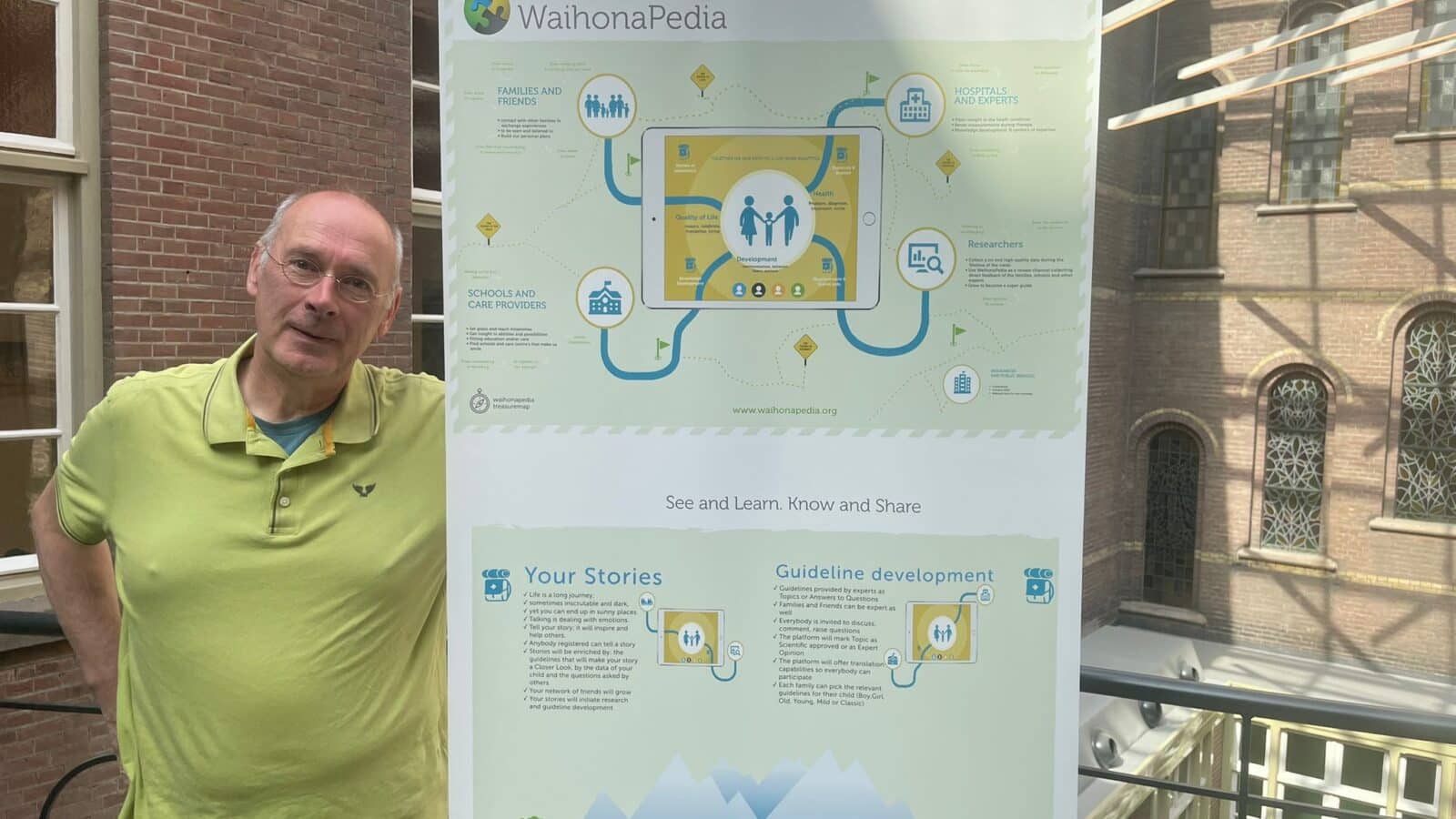
WaihonaPedia is not your average startup. It’s a unique platform born out of personal experience and the need to better support people with rare conditions. We spoke with Gerritjan Koekkoek, the founder of WaihonaPedia, about how it started, where they are now, and what their dreams for the future are.
From personal struggle to collective solution
It all began in 1999, when Gerritjan’s son Rai was born. Within a month, he was diagnosed with Cornelia de Lange Syndrome, a rare genetic disorder. Gerritjan quickly discovered how difficult it was to find reliable information and how little support was available for parents like him. “You’re often left on your own,” he says. “The medical world tries its best, but when it comes to rare disorders, knowledge is scarce and fragmented. There are hardly any platforms where you can share experiences or find trustworthy information.”
In 2015, Gerritjan decided, together with other parents and stakeholders, that things had to change. They founded WaihonaPedia, an online platform created by and for people affected by rare conditions.
What is the WaihonaPedia platform?
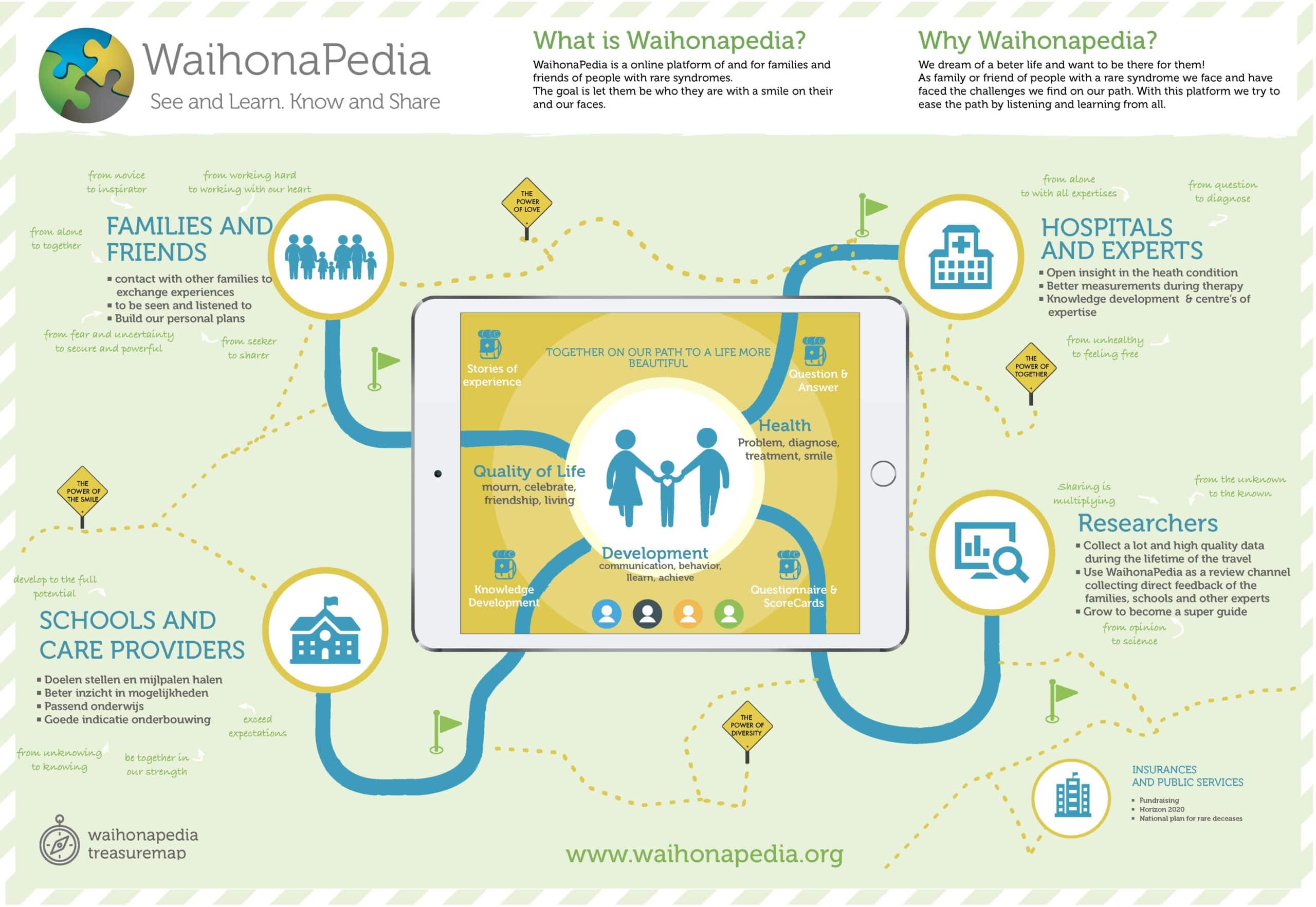
WaihonaPedia is a digital space where people with rare conditions (and their families) can find reliable information, connect with peers, and share knowledge. The name comes from the Hawaiian word waihona, which means ‘source’ and that’s exactly what it aims to be: a source of support, information, and connection; a treasure of love, but also a treasure of data.
The platform goes far beyond a standard forum. For instance, users can enter their child’s growth data and compare it with that of other children with the same condition. Gerritjan explains: “Children with rare syndromes often grow differently from average. Thanks to condition-specific growth curves developed by our expert centers (scientists), parents can see how their child is growing compared to peers. These data are also valuable for doctors and researchers. It’s a great example of collaboration between science and citizens!”
Users can also share experiences, ask questions, or keep track of data such as treatments and medications. And perhaps most importantly: users retain ownership of their data and decide what happens to it.
Vision for the future: the citizen health platform
Although WaihonaPedia focuses on rare conditions, its potential is much broader. Gerritjan says: “We believe this is the future of health technology. Not top-down systems, but platforms that emerge from the people themselves where users are in control of their own data and experiences. We are happy to share our intellectual capital with others to improve healthcare.”
The platform runs on XWiki, an open-source system developed in France. This aligns WaihonaPedia with the growing European movement for digital autonomy: technology that is transparent, democratic, and privacy-friendly.
WaihonaPedia and JADS: working on innovation
Since February, WaihonaPedia has been based on the JADS campus in ’s-Hertogenbosch. They rent an office space there, but hope for more than just a desk. “We really want to collaborate with students and researchers,” says Gerritjan. “JADS is the perfect place where technology, data, and social impact come together. That’s exactly what we’re about.”
One idea is to use AI on the platform. Imagine an AI assistant that knows who in the community has deep knowledge on a topic and can automatically provide answers when that person is unavailable. That way, knowledge remains accessible at all times.
Bots and sources
The platform has now accumulated so much valuable information that it’s been discovered by bots from major tech companies like Amazon and Google which has created new challenges. “About 80 to 90% of our traffic now comes from bots. That puts a huge strain on our servers. And the sad part is: this information is passed on through smart assistants, for example, without people knowing it comes from us. The source, our community, gets no recognition.”
Without visibility and funding, valuable initiatives like WaihonaPedia risk disappearing. “In the age of AI, it’s crucial not to forget where knowledge comes from and who’s doing the work to make it available.”
An alternative to traditional registries
Gerritjan also sees a key difference between WaihonaPedia and traditional medical registries. Many registries are created by researchers, but few people actually contribute to them. “They offer little in return to the patient. Often, you fill something out once and never hear back. We believe it works much better when people manage their own data at their own pace and on their own terms. That way, the information stays up to date and useful. We want to build trust in citizens to manage their own data.”
A call to students, researchers, and tech enthusiasts
Finally, Gerritjan has an invitation for anyone who wants to help build this platform: “We’re looking for people with technical knowledge, data skills, UX expertise—or just a passion for social impact. Here, you’re not just building something beautiful—you’re truly making a difference. Students who work with us often say: this is what gives me energy.”
Want to learn more or get involved?
Feel free to drop by the JADS campus for a coffee or send us a message. WaihonaPedia is always looking for people who want to help build a healthier, fairer digital future.